

OK02 Opening Keynote "Ultra-Low Latency Real-Time Processing for Quantum Computing"
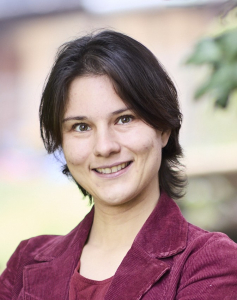
Bettina Heim, Nvidia, Switzerland
Quantum computing is one of the most promising technologies of our era. The fundamentally different nature of quantum processors (QPUs) requires a highly interdisciplinary effort to tackle challenges across the entire system to effectively leverage quantum resources. To realise the commercial potential of quantum acceleration, significant HPC resources are required to accelerate workloads necessary to the operation of a QPU. These workloads involve tasks related to quantum error correction, system calibration, and optimal control, and hence require an ultra-low latency exchange between the quantum system controllers (QSCs) and traditional processors such as GPUs.
Introducing a tight coupling between HPC and QPU environment presents a number of challenges that have become a focus within the quantum-HPC community.
Most QSCs are implemented using FPGAs or RFSoC devices, which run a firmware-defined pulse processor unit (PPU). Connecting the QSC via PCIe card can enable direct communication but poses scaling challenges. A potentially preferable alternative that offers better options for distribution is the use of a network interface card (NIC) for connection via Ethernet or InfiniBand.
In this talk I will discuss NVIDIA's effort to facilitate the development of advanced QPUs using real-time processing on GPUs using the NVQLink architecture. NVQLink leverages the RDMA over Converged Ethernet (RoCE) protocol to bypass traditional network stacks and CPU involvement, enabling sub-microsecond data transfer. This is essential to achieve real-time quantum error correction, where latency tolerances are of the order of tens of microseconds for some QPU architectures. While most existing solutions are limited to using FPGA for real-time processing, the availability of real-time compute on GPUs greatly facilitates the use of machine learning and AI for automation and accuracy improvements. First realisations of NVQLink systems thus enable a big step forward towards achieving fault tolerant quantum computing at scale by enabling data-driven research and co-develop of hardware and software solutions to achieve the necessary throughput and latency for commercial applications.
Bettina Heim is a systems software engineering manager at NVIDIA where she leads the CUDA-Q Engineering team. Throughout her career, she has initiated and advanced industry efforts to develop standards and toolchains for a range of quantum architectures. After her Ph.D. in quantum physics at ETH Zurich, she joined Microsoft where she led the compiler and runtime development within Azure Quantum.