

LK01 - IEEE CEDA Distinguished Lecturer Lunchtime Keynote "Unifying Accelerator Design and Programming for Evolvable Computing"
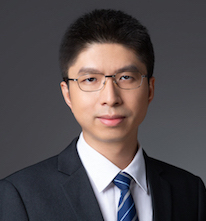
Zhiru Zhang, Cornell University, United States
We are living through a fundamental shift in computing, where performance and efficiency gains increasingly come from specialised accelerators tailored to "hot" domains like AI. Yet as accelerator-centric computing proliferates, it continues to build atop a longstanding disconnect between the way we design these systems and the way we program them. This divide slows hardware innovation, complicates the software stack, and makes accelerators far harder to evolve than the rapidly changing applications they are meant to serve.
In this talk, I will present our recent research on closing this gap through a unified hardware-software co-design stack. At the core is a new abstraction that generalises single program multiple data beyond largely independent threads to encompass spatial structure and communication. It offers a single, composable model for expressing both how accelerators are constructed and how they are programmed. I will show how this abstraction is realised in Allo, an open-source, Python-based, MLIR-powered framework to enable concise specifications that map efficiently across FPGA, ASIC, NPU, and GPU platforms. I will conclude with a forward-looking perspective on automated compiler construction, differentiable hardware synthesis, and agentic design automation, and discuss how these directions may help move us toward truly evolvable heterogeneous computing.
Zhiru Zhang is a Professor in the School of ECE at Cornell University. He also serves as the lead PI for the "Heterogeneous Computing Platforms" theme in the SRC/DARPA JUMP 2.0 ACE Center for Evolvable Computing. His current research investigates new algorithms, design methodologies, and automation tools for heterogeneous computing. Dr. Zhang is an IEEE Fellow and has been honored with the Intel Outstanding Researcher Award, AWS AI Amazon Research Award, Facebook Research Award, Google Faculty Research Award, DAC Under-40 Innovators Award, DARPA Young Faculty Award, IEEE CEDA Ernest S. Kuh Early Career Award, and NSF CAREER Award. He has also received 10+ best paper awards from premier conferences and journals in computer systems and EDA. Prior to joining Cornell, he co-founded AutoESL, a high-level synthesis start-up later acquired by Xilinx (now part of AMD). AutoESL's HLS tool evolved into Vivado HLS (now Vitis HLS), which is widely used for designing FPGA-based hardware accelerators.